

Cycling and lower back pain. What your bike fit is not telling you.

Updated: Oct 4
A bike fit is one of the first things road cyclists look at when their lower back starts aching. Saddle height, reach, cleat position, handlebar drop. All of it matters and getting it right makes a real difference.
But here is the thing a bike fit cannot account for. It cannot change the body you bring to the bike.
If you have spent eight hours sitting at a desk, then an hour in the car, and then you clip into your pedals, your body is already locked into flexion before you start pedalling. Your hip flexors are short. Your thoracic spine is stiff. Your glutes have barely been used all day. The bike fit might be perfect, but the body using it is already compromised.
That is what I see with most of the road cyclists who come in with lower back pain. The bike is rarely the whole problem. It is just the final position in a day full of forward-leaning, hip-flexed, rounded postures.
We really do not like standing straight
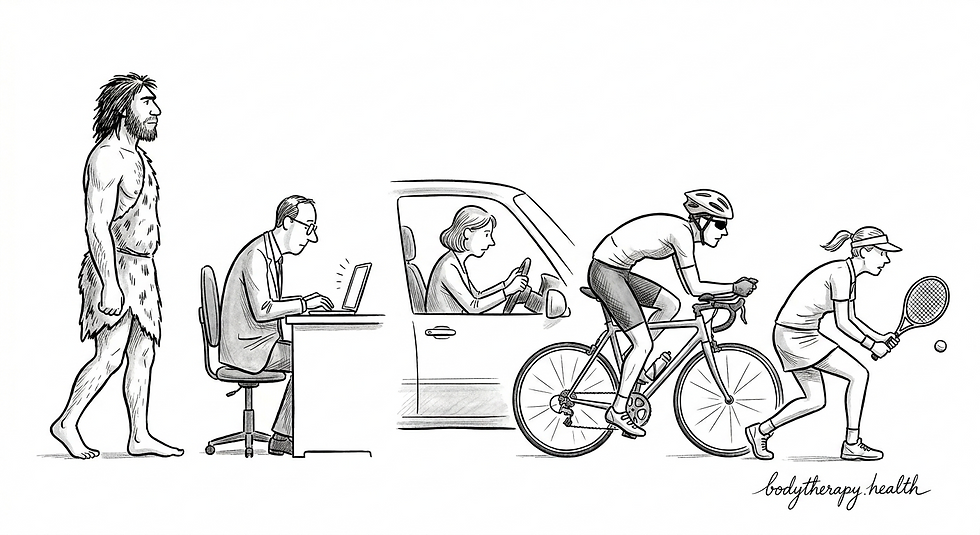
Think about how you spend your day. Sitting at a desk, leaning forward into a screen. Sitting in a car, hips flexed, shoulders rounded. Then sitting on a bike, bent over the bars, hips flexed again. If you play tennis as well, you are leaning forward into that too.
We evolved to stand upright, and we spend almost every waking hour folding ourselves back in half. It is like going back to caveman posture but with better shoes.
Your lower back is the bit that objects to all of this. It is being pulled on from the front by tight hip flexors all day, then asked to stabilise you on the bike for another two or three hours in the same position. At some point, it starts to complain. That is not a bike problem.
That is a lifestyle pattern.
What I actually find when cyclists come in
The pattern is remarkably consistent. Tight psoas and iliacus from all that sitting and riding. Stiff thoracic spine because the upper back has been rounded forward all day. Glutes that are not contributing enough because they have spent most of the day being sat on.
The lower back ends up doing more work than it should because everything above and below it is restricted or underactive. The pain sits in the lumbar spine, but the problem is in the hips, the upper back, and the muscles that connect them.
When I release the hip flexors and work through the thoracic spine, most cyclists notice an immediate difference in how their lower back feels. They stand up straighter. They feel less compressed. And when they get back on the bike, the position feels more sustainable because their body is not fighting itself to hold it.
Why a bike fit alone does not solve it
A good bike fitter works with what they see on the day. If your hips are tight, they will adjust the bike to accommodate that. If your thoracic spine is stiff, they will bring the bars up. The fit compensates for your restrictions rather than fixing them.
That is not a criticism. It is the right thing to do. But it means the fit is only as good as the body it is built around. If your flexibility and muscle balance change, the fit needs to change too. Or better still, address the restrictions in your body so the bike fit can actually work the way it was intended to.
This is where regular treatment makes a real difference. Keeping the hip flexors mobile, keeping the thoracic spine moving, making sure the glutes are engaged and contributing. These are not big interventions. They are maintenance that stops small restrictions from building into the kind of lower back pain that takes you off the bike.
What you can do alongside treatment
The most important thing is to break up the flexion pattern through your day. If you sit at a desk, stand up and extend your hips regularly. If you drive to your rides, spend a few minutes stretching your hip flexors before you clip in. After a ride, open up the front of your body rather than just stretching your legs.
Glute strengthening helps too, for the same reasons I described in the runners post. If your glutes are not pulling their weight, the load falls on your lower back and your quads. Simple activation work before a ride can change how your body handles the effort.
And if your lower back has been grumbling for a while despite a good bike fit, it is worth getting someone to look at what is happening in your body, not just your setup. The answer is often in the hips and upper back, not where the pain is.
If you run too, a similar thing happens with tight calves, which I cover in running on tight calves. And if your lower back pain has been around for a while, I have written about how massage and dry needling can help persistent lower back pain.
I am based in Sissinghurst, just outside Cranbrook, and I work with cyclists from across the Weald of Kent. Book a massage


