

Massage for Menopause & Perimenopause in Cranbrook
More than half the women I treat are going through menopause or perimenopause. Many of them didn't come to me for that reason. They booked because of a sore shoulder, a stiff back, or tension they couldn't shift. It was only during the session, or over several sessions, that we realised hormonal change was playing a bigger role than they'd thought.
Menopause affects far more than periods. It changes how your muscles feel, how your joints move, how you sleep, and how your body handles stress. I can't stop any of that. But I can help your body cope with it better.

1
What Menopause Does to Your Body
Falling oestrogen affects your muscles, joints, and connective tissue. Many women notice stiffness and aching that seems to come from nowhere. Shoulders lock up. Hips feel heavy. Backs tighten for no obvious reason.
On top of that, your nervous system becomes more reactive. Stress builds faster and takes longer to settle. Anxiety can show up even if you've never experienced it before. Your body starts holding tension in places it didn't used to.
This isn't in your head. These are real, physical changes. They deserve proper attention.
2
Whast I Actually Do in a Session
I treat you in the same way I treat everyone. We start with a conversation about how you're feeling and what's going on in your body. Then I work with what I find.
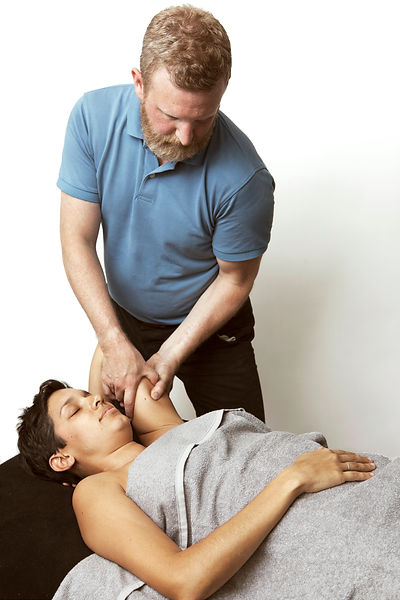
For women going through menopause, that often means focused work on the shoulders, upper back, and hips. Joint stiffness and fascial tension are common, so I use a mix of deep tissue massage, myofascial release, and sometimes dry needling or cupping where it will help. The techniques are the same ones I use for any client. The difference is in understanding why your body is responding the way it is.
Pressure is always adjusted. Nothing is forced. If something isn't helping, we change it.
3
What the Evidence Says
Research supports massage for reducing anxiety during menopause. A 2026 meta-analysis found that massage produced a statistically significant reduction in anxiety scores in menopausal and postmenopausal women compared with control groups.
The picture around sleep is less clear. The same study found no significant improvement in overall sleep quality from massage. That said, almost every woman I work with tells me she sleeps better the night after a session. Whether that's the physical release, the nervous system settling, or simply having an hour where someone else takes care of you, I honestly don't know. I'm not going to pretend the science is settled when it isn't. But the pattern in clinic is consistent enough that it's worth mentioning.
There is also good evidence that massage helps with general muscular tension and joint discomfort, which are among the most common physical complaints during menopause.
4
Who This Is For
ou don't need a diagnosis or a referral. You don't need to be sure that menopause is the cause of what you're feeling. If you're a woman in your 40s or 50s dealing with joint pain, muscular stiffness, anxiety, tension, or a body that just doesn't feel like yours anymore, this is relevant to you.
Some clients come specifically because of menopause. Others come for something else entirely and we work out the connection together. Either way is fine.
5
What This Isn't
I'm a soft tissue therapist, not a menopause specialist. I don't prescribe HRT, recommend supplements, or use essential oils as part of treatment. I don't offer a special "menopause massage" that's different from what I do with any other client.
What I offer is skilled, hands-on treatment from someone who understands what menopause does to the body and takes it seriously. If I think you'd benefit from seeing your GP or another practitioner alongside massage, I'll say so.
6
Session Details
A standard appointment is 60 minutes and if my diary is full and you need to be seen sooner, I also offer Priority Appointments outside my normal hours at £100. You can read more about how that works here..


