

Dry Cupping and Massage: What It Is and When I Use It

Updated: Mar 8
Dry cupping is one of those techniques that tends to raise questions the moment people see it. Sometimes it’s curiosity, sometimes mild concern, especially if someone has seen the circular marks cupping can leave. It looks intense, which is why it’s worth explaining what it actually is and why I choose to use it with some clients.

Dry cupping is a manual therapy technique that uses suction rather than pressure to work with muscle and connective tissue. I use silicone cups, including RockPods, which allow me to control both the level of suction and how the cups move. There’s no heat involved and it’s very different from traditional fire cupping.
How dry cupping works in the body
Most massage techniques apply pressure down into tissue. Dry cupping works the opposite way. The suction gently lifts the skin and underlying layers.
That lifting effect can change how tissue moves and how it feels under load. It can also increase local circulation and make areas of long-standing tightness easier to work with during hands-on treatment. In some cases, tissue that feels dense, stuck, or resistant to pressure responds better to being lifted than pushed.
I may leave cups in one place for a short time or move them through the tissue. Both approaches have their place and depend on what’s happening in your body on the day.
Why I use dry cupping alongside massage
I don’t offer dry cupping as a standalone service. I use it as part of a broader massage session when it feels appropriate.
Some areas, particularly around the back, shoulders, hips, and thighs, don’t always respond well to repeated deep pressure. Dry cupping can help change that by creating space and improving glide between tissue layers. This often makes the hands-on work that follows more effective and more comfortable.
I see cupping as another tool. It’s not better than massage and it’s not essential. It’s simply useful in certain situations.
What dry cupping feels like
People often expect dry cupping to be painful. Most are surprised that it isn’t. The sensations my clients usually describe are a strong pulling or stretching feeling rather than sharp pain. Some people notice warmth or a sense of release in the area afterwards. Sensitivity varies, so I adjust pressure throughout and check in as we go.
If something doesn’t feel right, we stop. It’s always a collaborative process.
About the marks cupping can leave
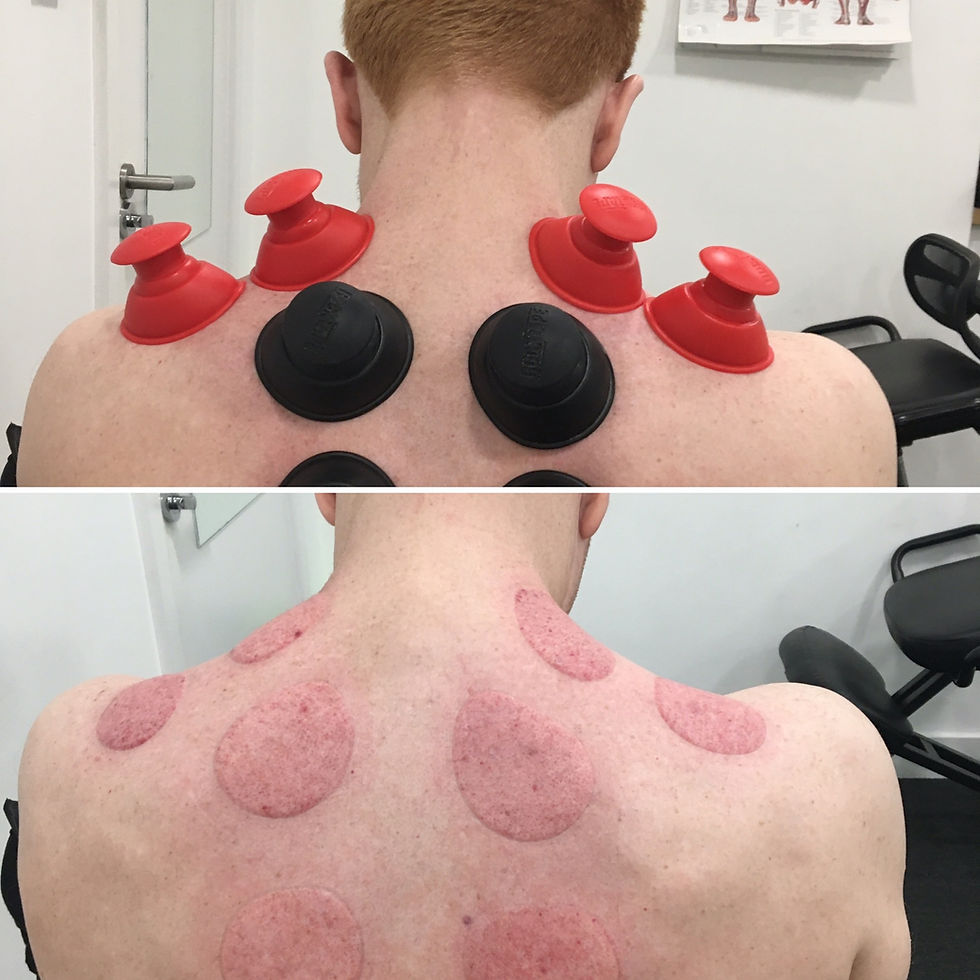
Dry cupping can leave circular marks on the skin. These are not bruises in the usual sense. They’re caused by changes in blood flow close to the surface of the skin.
The marks usually fade within a few days, sometimes up to a week. Colour and duration vary depending on the person and the area treated. I won’t use cupping in visible areas if that’s a concern for you, and we always talk it through first.
Who dry cupping can be useful for
Dry cupping can be helpful for people dealing with long-standing muscle tightness, restricted movement, or areas that feel stubborn and hard to shift. It's commonly used in sports massage for back, shoulder, and hip tension, and works well for people in active training or sports recovery. Based in Sissinghurst, I work with clients across Cranbrook and the Weald of Kent.
That said, it’s not for everyone.
Who it may not suit
Dry cupping may not be appropriate if you have very fragile skin, are on certain medications that affect clotting or skin integrity, or if skin marks would cause concern. Some people simply don’t like the sensation, and that’s reason enough not to use it.
We always decide together.
How it fits into a session
If I think dry cupping could be helpful, I’ll explain why and how I’d use it. It’s always optional and it’s usually just one part of a massage session rather than the whole focus.
You don’t need to request it when booking and you don’t need to know in advance whether it’s right for you. That’s part of my role during assessment.
The bottom line
Dry cupping isn’t a fix on its own. It’s a technique that can be useful when applied thoughtfully and combined with hands-on massage. Like everything I do, it’s about adapting the treatment to your body rather than following a routine.
Book your massage and ask me when you get here if you want to try cupping as part of your treatment.


Comments